Madeleine.Cool

Archive

  1. Enough of war!

    Enough of the idolatry of self and money! Enough of the display of power! Enough of war! True strength is shown in serving life. With evangelical simplicity, Saint John XXIII once wrote: “The benefits of peace will be felt everywhere, by individuals, by families, by nations, by the whole human race.” And echoing the incisive words of Pius XII, he added: “Nothing is lost by peace; everything may be lost by war” (Encyclical Letter Pacem in Terris, 116).

    Pope Leo

  2. Wikipedia has a guide to spotting AI writing

    The whole guide is pretty excellent, but I liked this assessment of the issues of AI content.

    LLMs (and artificial neural networks in general) use statistical algorithms to guess (infer) what should come next based on a large corpus of training material. It thus tends to regress to the mean; that is, the result tends toward the most statistically likely result that applies to the widest variety of cases. It can simultaneously be a strength and a "tell" for detecting AI-generated content.

    For example, LLMs are usually trained on data from the internet in which famous people are generally described with positive, important-sounding language. Consequently, the LLM tends to omit specific, unusual, nuanced facts (which are statistically rare) and replace them with more generic, positive descriptions (which are statistically common). Thus the highly specific "inventor of the first train-coupling device" might become "a revolutionary titan of industry". It is like shouting louder and louder that a portrait shows a uniquely important person, while the portrait itself is fading from a sharp photograph into a blurry, generic sketch. The subject becomes simultaneously less specific and more exaggerated.

    Wikipedia

  3. Animals urinate in the same amount of time...

    I learned that (almost) all mammals take the same amount of time to urinate from a book of facts.

    All mammals that weigh more than about six-and-a-half pounds take about the same time to urinate, thanks to the structure of the urethra. Karen Hopkin reports

    Scientific American

    But today I learned that mammals also defecate in the same amount of time!

    What else did we learn? Bigger animals have longer feces. And bigger animals also defecate at higher speed. For instance, an elephant defecates at a speed of six centimeters per second, nearly six times as fast as a dog. The speed of defecation for humans is in between: two centimeters per second.

    Together, this meant that defecation duration is constant across many animal species – around 12 seconds (plus or minus 7 seconds) – even though the volume varies greatly. Assuming a bell curve distribution, 66 percent of animals take between 5 and 19 seconds to defecate. It's a surprisingly small range, given that elephant feces have a volume of 20 liters, nearly a thousand times more than a dog's, at 10 milliliters. How can big animals defecate at such high speed?

    ...

    Putting the length of feces together with the properties of mucus, we now have a cohesive physics story for how defecation happens. Bigger animals have longer feces, but also thicker mucus, enabling them to achieve high speeds with the same pressure. Without this mucus layer, defecation might not be possible. Alterations in mucus can contribute to several ailments, including chronic constipation and even infections by bacteria such as C. difficile in the gastrointestinal tract.

    Beyond simply following our scientific curiosity, our measurements of feces have also had some practical applications. Our defecation data helped us design an adult diaper for astronauts. Astronauts want to stay in space suits for seven days, but are limited by their diapers. Taking advantage of the viscosity of feces, we designed a diaper that segregates the feces away from direct contact with skin. It was a semifinalist in the NASA Space Poop Challenge earlier this year.

    PBS

  4. Arctic Ground Squirrels

    Arctic Ground Squirrels hibernate for something like eight months of the year—and when they are hibernating, their body temperature goes down to freezing (or even slightly below!) and they let their brains die. Then, over a couple hours when they emerge from hibernation, they regrow their brains. And, they indeed don't have the same memories they had before—they don't fear theings they feared the year before. But, don't worry, they do remember their friends.

    Listen to this great Radiolab Terrestrials episode to learn more.

    The photo is by Joel Sartore. Here's what he posted about the squirrels:

    Hibernating Arctic ground squirrels (Spermopilus parryii) at the University of Alaska at Fairbanks. This animal is the grand champion of all hibernators. It’s the only mammal that can drop its body temperature to below freezing. They hibernate for seven months. Females go in first, in August. Males follow a month later. They come out again to feed on tundra plants in May. Biologists at UAF have been studying the animal for 20 years, but still can’t figure out how this animal maintains a flat body temperature for all those months just above freezing. “You could put people into hibernation for space trips if you could understand it better,” said Franziska ‘Fran’ Kohl, one of the biologists here. “They also show symptoms of Alzheimers during hibernation.” She added that traumatic head injuries heal when in hibernation, another thing scientists are trying to figure out.

  5. Can a chat bot be "moral"?

    Is AI conscious? What's happening when we see AI try to keep from being shut down or stop to "look" at cat pictures? How do we go about making a "moral" chat bot?

    “We're starting to see AI systems that don't want to be shut down, that are resisting being shut down.

    With published research saying it could blackmail the engineer that's going to shut it off if given the opportunity to do so.

    Even when ordered, allow yourself to shut down, the AI still disobeyed 7% of the time.

    So my feeling was we were out way past where theory was. You couldn't really approach these questions from a theoretical perspective, because we just didn't have enough data to be able to make categorical theoretical assessments of what was going on. But there was all this interesting experimental work happening that was just showing this is the kind of behavior that's coming out of these things.

    We should try to figure out what's going on to say, here are the things we can say with any degree of reasonable confidence for now. Here's where we draw the line and beyond that, it's all murky and speculative and we really don't know. So I wrote to a guy at Anthropic, whom I had met 10 years ago at Google, when he was 11 years old prodigy, and said, this is not about Anthropic[…]”

    From Search Engine: Mysteries of Claude, Feb 27, 2026

  6. What is homework for in an age of AI?

    This is one of the first things on AI I found really interesting. It forces us to look at the holes in our current tactics—AI, like the calculator did to math, reveals that the essays we ask students to write are about checking off boxes, not engaging with the task of writing, which is also a task of thinking and communicating.

    Maybe the formulaic, three-point, five-paragraph essay was never actually a good assignment.

    A teenager explains why he shouldn’t have to write homework essays anymore. Is there some way for adults to force teens to still do homework? Or to convince them they should want to?

    Search Engine

  7. Can design and code work on the same structure?

    Should design+code tools be trying to turn visuals into code? Or somehow facilitating the design and code working on the same thing directly?

    There’s a version of this where we end up in five years with translation tooling that actually works well. Code to canvas in milliseconds. Canvas back to code with full token fidelity. Collaboration happening fluidly across both environments.

    And we’d still be running two parallel systems, kept in sync by increasingly sophisticated automation, with all the maintenance overhead and structural drift that creates.

    The other version is one where the design system is the substrate both environments read from directly. Where a decision made in one place propagates to the other not through capture or export or handoff, but because they’re drawing from the same structure. Where AI agents generating UI are composing from a system that knows what it is, not generating approximations from visual reference.

    I know which version I think we should be building toward. I’m not sure the tooling announcements of the past six months are pointing there.

    The roundtrip is getting smoother. I’m more interested in why we need the trip at all.

    Murphy Trueman

  8. the more your typography responds to the viewport, the less it will respond to user preferences

    One action (zooming) changes the size of a pixel, while the other (resizing) changes the size of the browser itself – but both change the number of pixels across the width of the browser. As the window gets smaller, or the pixel gets larger – there are fewer pixels in the viewport.

    That disconnect makes responsive typography unreliable. If your text is set to resize based only on a viewport or container, then the user zoom will have no effect! Similarly, neither 1vw nor 100vw accounts for the user default font-size.

    Stephan Schwab

    This whole video from Oddbird was worth watching to see Miriam work through the reasoning. In addition to giving me much to think about in terms of writing good css for website visitors to have good experiences, I'm left wondering if it is possible for AI to have this sort of wondering. Can an LLM ask "hmm, I wonder how this approach to font sizing actually impacts with user preferences and zoom?"

  9. Rachel Andrew - Generative AI has broken the subject matter expert/editor relationship

    Generative AI has broken that contract. Increasingly writers receive content that looks polished, yet contains inaccuracies. This can be because the SME, while polishing their content using AI tools, has missed the fact that the tool has also modified some code or changed the meaning of text. It can also be that the drive for productivity with these tools has meant that people are being asked to cover broader subject areas, so are relying on AI tools for research rather than their own knowledge. AI can be very confidently wrong, and if the text seems clear, it’s possible to miss that it’s clearly nonsense.

    Rachel Andrew

    Whether productivity gains have broadened who we ask to be experts or experts are missing the polishing effect of an AI "edit", the human editors have to do much more to ensure good content is good and true.

  10. Revolution, maybe

    But it’s very striking that at the end of that section I had with her [Laurie Tisch], she said: At the end of the day, it’s hard to convince someone like me to give up power.

    So I said: Then how do you change this kind of thing? How could this kind of thing ever change?

    And her words were: “Revolution, maybe.”

    Anand Giridharadas on the Ezra Klein Show

  11. Software development is thinking made tangible.

    "Each advancement addressed a real friction[…] Yet the fundamental challenge persists bc it’s not mechanical. It’s intellectual. Software development is thinking made tangible. The artifacts we create[…]are the visible outcome of invisible reasoning about complexity."

    Stephan Schwab

  12. One line of CSS for responsive colors

    The title is a little misleading, as it requires a couple pieces be in place, but, if you're using css custom properties ("variables", colloquially), to set your background color, it only takes one line of css to change the foreground to either black or white.

    More to come by way of an explanation and more strategies, but here's the code as I'm using it now:

    color: hsl(from var(--c) 157 54 calc(18 + round(nearest,calc(100 - l),100)));
    
  13. The Stakhanovite movement

    The Stakhanovite movement (стаха́новское движе́ние) was a mass cultural movement of workers which originated in the Soviet Union, and encouraged socialist emulation and rationalization of workplace processes. The Stakhanovites (стаха́новцы) modeled themselves after Alexei Stakhanov and took pride in their ability to produce more than was required by working harder and more efficiently, thus contributing to the common good and strengthening the socialist state. The movement began in the coal industry but later spread to many other industries in the Soviet Union. Initially popular, it eventually encountered resistance as the increased productivity led to increased demands on workers.

    Wiktionary

  14. Lily-livered etymology

    The first known use of lily-livered was in 1605. From the medieval belief that the liver was the seat of courage, and the pale color of the lily flower. A person who had no blood in their liver would have no courage and would thus be a coward. Equivalent to lily + livered.

    Wiktionary

    lily-livered apparently means cowardly and just comes from the color of lilys being pale and thus not courageous.

  15. The joy

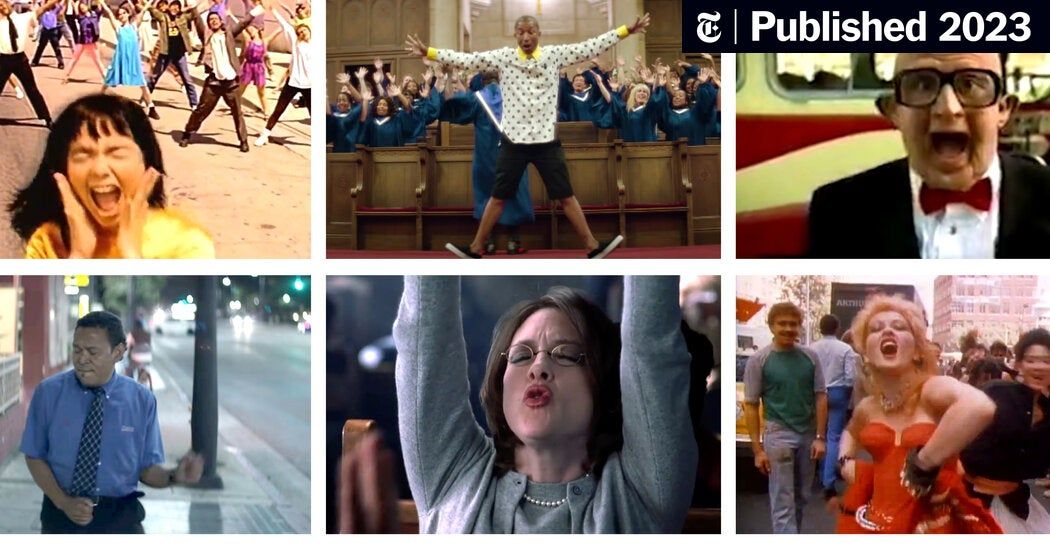
    For a kid watching TV in the 1980s and '90s, seeing grown-ups get weird meant that adulthood might not have to be a drag.

    NYT

  16. AI as intern

    He told me that AI right now is like having a little assistant to boss around and make you some stuff so you can say, 'Most of this is garbage, but I can use this part, and you’ve given me something to work with or against.'

    —Austin Kleon, AI as intern

  17. What is home for?

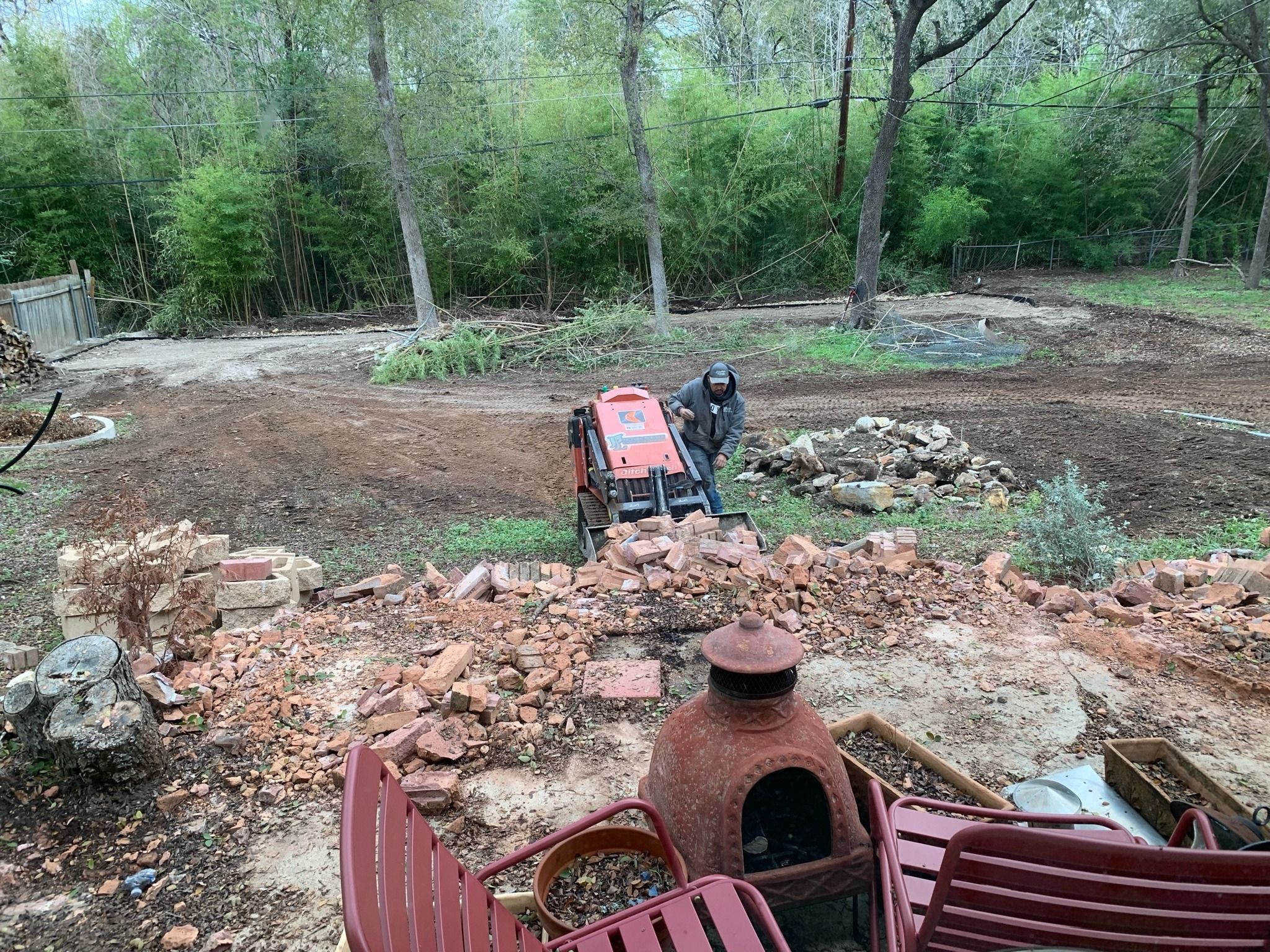
    picture of a man on a machine in a backyard filled with rubble and trampled bamboo

    is a home for being in, for cradling outside the harsh edges of the world? is it for inviting, for sharing and laying open?

    maybe one reason people like work is you get relationships but with guarantees of civility and of consistency.